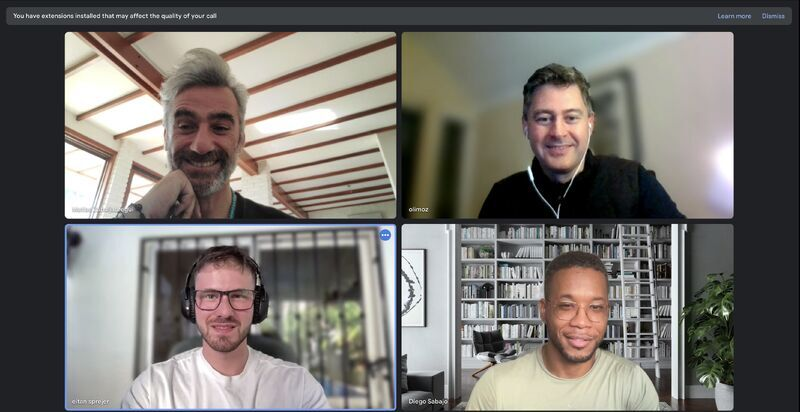
We're excited to announce that Agentico is contributing one day of staff time per week to Apart Lab's program of AI safety and interpretability research.
Why engage in research now? Because advising companies on intelligent AI demands more than being an automation engineer. Such is the intelligence of the latest models, such as OpenAI o1, that we are effectively recruiters for AI, facing the same issues as when hiring people:
-
What does the agent know about its own knowledge, is it's confidence well placed?
-
What is the agent thinking below the surface, is it aligned with us or quietly disruptive?
-
How does the agent prioritise information, are there hidden biases or blind spots?
These will be unavoidable questions for all businesses as agents become increasingly entrusted to carry out tasks. Ever more intelligent agents will get more done, yet will raise questions of alignment with our interests. Most especially when the agent is assisting with consequential tasks, even those overseen by a human; medicine, banking, accounting, law etc.
Some may eschew agents altogether, but over the coming years this will become ethically problematic and commercially awkward.
For example, agents already diagnose patients as accurately as many doctors [1,2]. Human doctors remain essential but who wouldn't want their harried A&E doctor to have the option of a second opinion from a proven AI? An AI which has none of the competing duties of the doctor.
There are enormous benefits to be had, but benefits always come with risks. We have the duty and opportunity to monitor and hence control those risks.
1. OpenAI o1: " Superhuman Performance of a LLM on the Reasoning Tasks of a Physician". Harvard Medical School. Dec 2024
2. OpenAI GPT-4o: " LLM Influence on Diagnostic Reasoning, A Randomized Clinical Trial". University of Virginia Health Sys. Nov 2024.